How Recued works
Recued is the local control plane between any AI, the people who reach you, and the accounts and data on machines you own. Agents and people ask; Recued checks the contract, shields personal data, holds risky actions for approval, acts locally, and records every run. Running work can be watched live, killed, or paused outright.
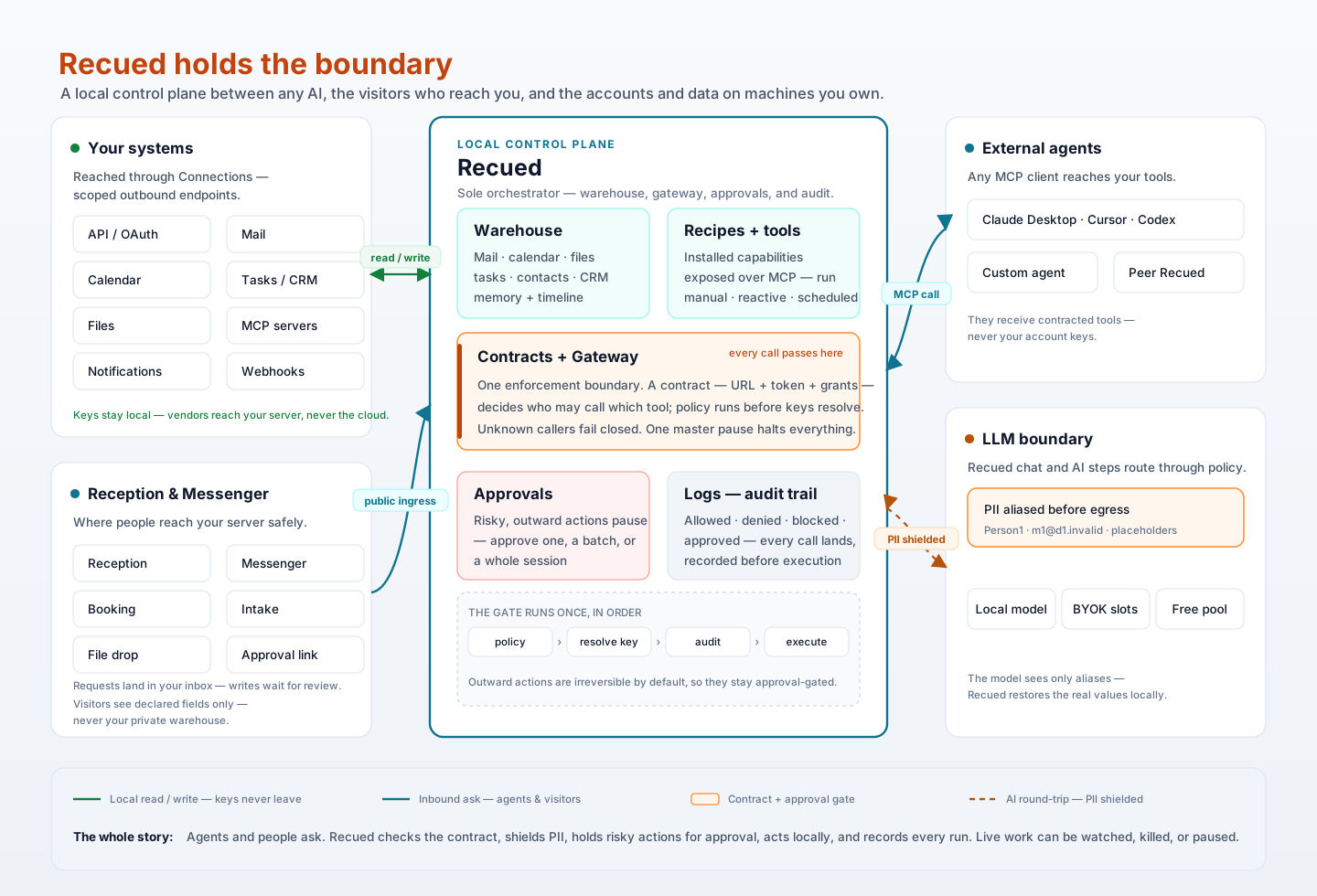
Reading the diagram
- Start in the middle — the control plane. The center is Recued, the local daemon you run. It holds your warehouse (mail, calendar, files, tasks, contacts, CRM snapshots, memory and timeline), the installed recipes and tools — run manually, reactively, or on schedules — the Contracts and Gateway enforcement boundary, approvals, and the Logs audit trail. Everything is local.
- Your systems, outbound. Through Connections, Recued reaches your own APIs, mail, calendar, tasks and CRM, files, MCP servers, notifications, and webhooks with scoped read and write. Keys stay local — vendors talk to your server, never a cloud.
- Visitors, inbound. People reach you through Reception and Messenger — booking, intake, file drop, approval links. Requests land in your inbox and writes wait for review; public pages expose declared fields only, and the private warehouse is never shown.
- External agents, inbound. Any MCP client — Claude Desktop, Cursor, Codex, a custom agent, or a peer Recued — calls in through a contract: a URL, a token, and tool grants. Agents receive contracted tools, never your account keys.
- The LLM boundary, round-trip. Recued chat and AI steps route through policy. Personal data is aliased before it leaves — Person1, m1@d1.invalid — the model reasons over the aliases, and Recued restores the real values locally.
- Follow the gate. Every inbound call passes the Contracts and Gateway boundary once, in order: policy, resolve key, audit, execute. Unknown callers fail closed, and one master pause halts everything. Risky outward actions are irreversible by default, so they pause for approval — approve one, a batch, or a whole session; allowed, denied, blocked, and approved calls all land in Logs, recorded before execution. Running work can be watched live, killed, or paused — controls on the work, never on the record.
The four flows
The arrows in the diagram carry the story.
Local read and write. Server to your systems and back — bidirectional, and the keys never leave the machine.
The inbound ask. Agents call in over MCP; visitors arrive through Reception. Both terminate at the gate.
The gate. Contracts and approval. Every call passes here before anything runs.
The AI round-trip. Out to an LLM with personal data shielded, back with the answer to restore locally.
The surfaces
- Recued
- The local daemon you run — the control plane itself: warehouse, recipes and tools, the Contracts and Gateway boundary, approvals, and the Logs audit trail. It runs on a machine you own.
- Contracts
- The grants surface. A contract is a URL, a token, and tool grants — the inbound twin of Connections.
- Connections
- Outbound endpoints to your own systems — API and OAuth, mail, calendar, CRM, files, MCP servers, notifications, webhooks.
- Recipes
- What Recued can do — installed capabilities exposed to agents over MCP.
- Logs
- The audit story — every allowed, denied, blocked, and approved run, recorded before execution.
- Reception
- One public-ingress surface — booking, intake, file drop, approval link — not the whole product.
See a business at work
Step through an illustrated replay of Recued flows across intake, bookings, payments, delivery, and governed automation. It uses simulated screens and synthetic data, and never contacts a server.